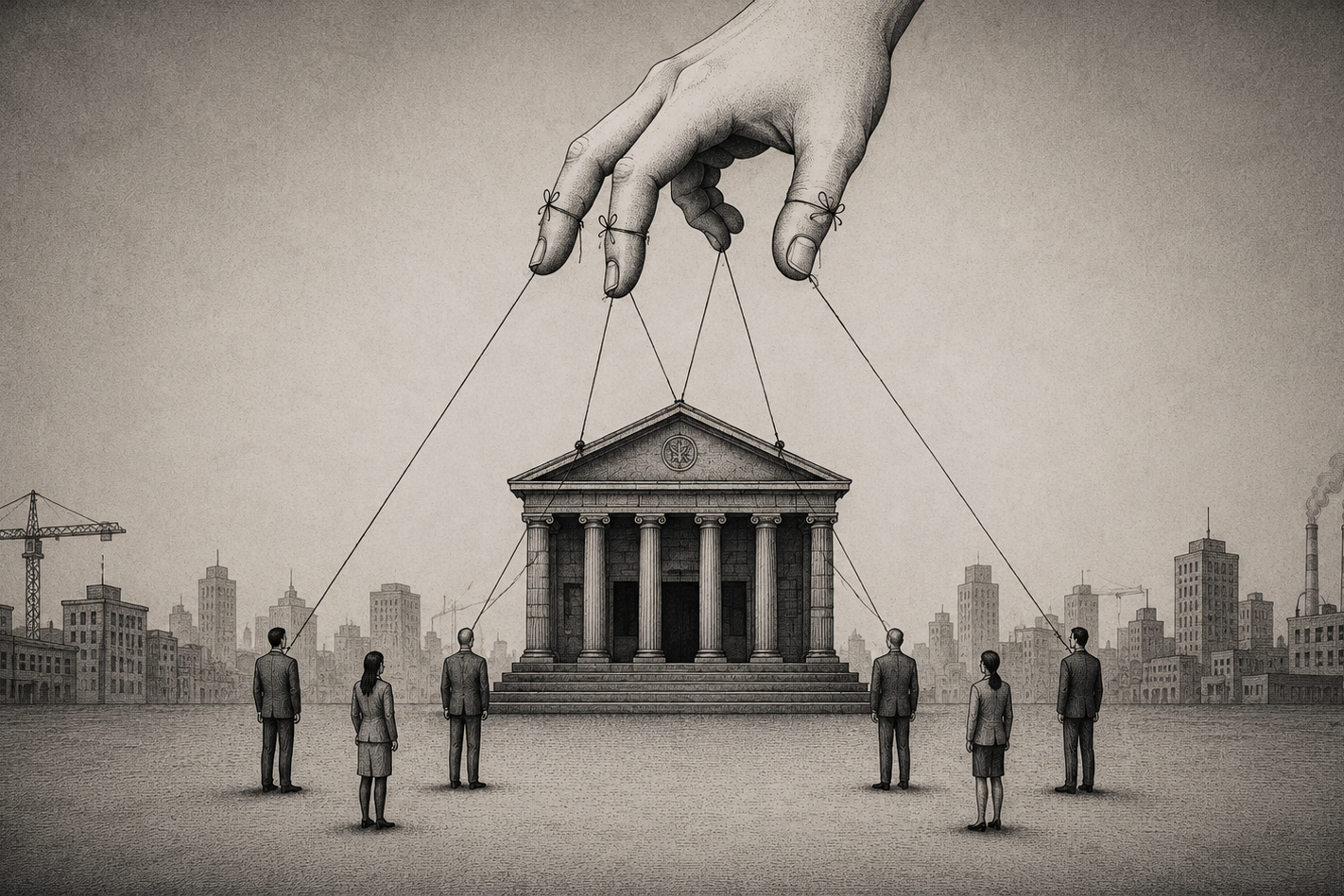
Davos 2026: Signals from a Fractured World
This year’s Davos was not about solutions. It was about condition. A quiet fatigue was present across conversations and corridors.
A quiet fatigue was present across conversations and corridors. A sense that the frameworks once used to understand and manage the world are no longer holding. Even among those accustomed to long-term thinking, the dominant question was not what comes next, but what is still keeping the system together.
This was not only visible on stage. It surfaced in private exchanges, in pauses, in the careful choice of words. The world felt less governable than before.
Geopolitics is no longer a background factor.
It defines the limits of what is possible.
In this context, Ukraine was not discussed as a separate issue. It appeared as a condensed experience of the current global reality.
The speech by Volodymyr Zelenskyy was one of the few moments without diplomatic softening. It was about security as a foundational condition, without which economic, technological, or institutional systems cannot function.
Alongside the official programme, another shift was clearly visible. Women’s voices at Davos were not merely present – they were organised.
Platforms and organisations such as The Female Quotient and World Woman Foundation operated as independent spaces for sense-making rather than symbolic representation. These were environments marked by fewer declarations and more precise language. Less performance, more focus on responsibility, resilience, and long-term consequences.
The recurring themes of Davos were familiar.
Artificial intelligence was discussed less as a breakthrough and more as an accelerator of existing asymmetries – between countries, institutions, and societies.
Energy and resources appeared not as growth drivers, but as sources of future tension.
Human resilience – mental health, burnout, the limits of endurance – emerged as a constraint that systems are still ill-equipped to address.
Davos did not offer answers this year.
It marked a rupture.
Old models no longer work. New ones are not yet formed. Trust – between states, institutions, and even between language and reality is becoming a scarce resource.
The main signal of this Davos is simple:
the future will not be shaped by those who speak the loudest, but by those able to name reality precisely and act without guarantees.
Ukraine is already operating in that reality.
The world is only beginning to approach it.
Editorial note by Olena Graffina
Editor-in-Chief, Cambridge Radar
Related



Written by
Founder & Editor-in-Chief, Cambridge Radar · Business Strategist & AI Systems Architect
Founder & Editor-in-Chief, Cambridge Radar, Business Strategist & AI Systems Architect