What If We Wiped Out Artificial Debts to Free the Real Economy?
In the previous article, we exposed one of the biggest “secrets“ of the modern financial system: most money is not earned into existence… it is created into existence, digitally, through accounting entries. Now comes the real question.
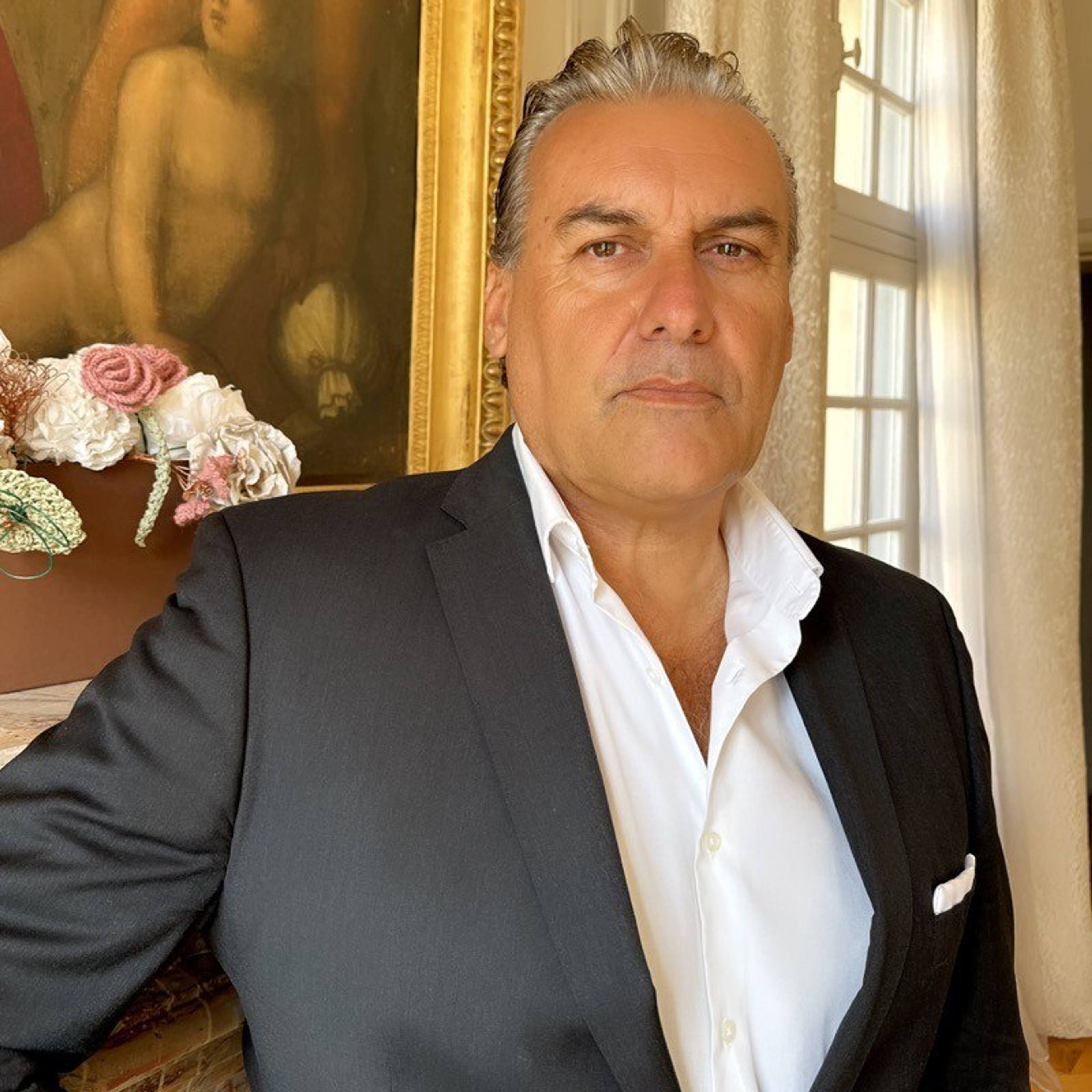
In the previous article, we exposed one of the biggest “secrets“ of the modern financial system: most money is not earned into existence… it is created into existence, digitally, through accounting entries.
Now comes the real question.
If money can be created out of thin air to finance debt, why should citizens be crushed forever by taxes to repay that same debt?
For several years now, monetary policies such as Quantitative Easing (QE) have injected massive amounts of liquidity into the global economy. This money, created out of thin air by central banks, has largely been used to finance a significant share of public and private debt. These debts, whose actual use is itself questionable, are now crushing the economy and are constantly used by the State as an excuse to keep raising taxes on citizens.
The result? According to the OECD, France remains one of the most heavily taxed countries in the developed world. In 2024, its tax-to-GDP ratio reached 43.5%, the second-highest level in the OECD, just behind Denmark at 45.2%, the United Kingdom stood at 34.4%, and the United States at 25.6%
But one fundamental question, clearly taboo, must be asked:
What if we simply cancelled the debts financed by “free money”?
1. A Large Share of Today’s Debt Is Based on Free Money
Public debts financed through QE or other monetary mechanisms do not involve real savings. They simply come from money creation: money created out of nothing, by pressing the ENTER key on a computer keyboard!
The creditors of the State broadly fall into three categories:
Central Banks
They have massively purchased government bonds through QE, representing around 25% of public debt in the euro area, according to OFCE.
Private Banks
Although they are subject to prudential rules such as Basel III, they can create money out of thin air to buy government bonds, just as they do when granting loans. When a commercial bank grants a loan, it literally creates the funds it lends — it is not lending the savings it has collected. This represents around 10% of public debt, according to Vie-publique.fr.
Institutional Investors
Institutional investors, such as funds like BlackRock, have indirectly benefited from QE through the massive overvaluation of their bond assets. Around 65% of French public debt is held by them. It is estimated that QE allowed them to generate an additional 10% to 20% profit on the overall value of their portfolios, according to sources including Banque de France, BSI Economics, the OECD, and the Financial Times.
Although part of the government bonds they hold was financed by free money — which would legitimately justify cancelling that portion of the debt — we will not take this aspect into account here, for the sake of simplicity.
25% (central banks) + 10% (private banks) = 35% of public debt financed by free money
That is the not-so-modest sum of around €1.13 trillion as of Q2 2024, which could be easily, quickly, and legitimately deducted from French public debt.
2. Cancelling These Debts Would Cause No Real Harm
These debts come exclusively from accounting mechanisms. They are not based on real savings. They are simply lines of assets and liabilities recorded on balance sheets. Cancelling them would therefore cause no real damage to anyone.
- No saver would lose the money they worked for.
- No pensioner would see their retirement savings disappear.
- No productive company would be deprived of capital it had actually earned. Why? Because these debts were not financed by accumulated work, production, or real sacrifice. They were created through the monetary system itself. They are legal debts, yes. They appear in official statistics, yes. They are used politically to justify taxes, austerity, and public spending cuts, yes. But economically, they are not the same as debts financed by real savings. A debt financed by a household’s savings is one thing. A debt financed by money created out of thin air is something else entirely. Pretending they are the same is intellectually dishonest. And yet this is exactly what the current system does. It treats every euro of debt as if it had the same economic origin, the same legitimacy, and the same moral weight. That is absurd.
3. The Real Question
- If part of the debt was financed with money created out of nothing, why should citizens be taxed forever to repay it?
- If no real savings were used to create that money, who would actually be harmed by cancelling it?
- If the system was able to create this money overnight to save banks, markets, and governments, why would it be impossible to erase it when it crushes the real economy?
These questions are almost never asked in mainstream political debate. Why? Because they expose the uncomfortable truth.
A significant part of what citizens are told is “public debt” is not a sacred debt owed to hardworking savers. It is a balance sheet construction. It is accounting. And accounting entries can be reversed.
Conclusion: The Debate They Do Not Want You to Have
Cancelling artificial debt is not about:
- Refusing to repay legitimate debts.
- Stealing from savers.
- Destroying trust in the economy. It is about making a clear distinction between two very different things: real debt, financed by real savings, real work, and real economic sacrifice — and artificial debt, financed by money created out of thin air. The first must be respected. The second must be questioned. Because if citizens continue to accept higher taxes, lower public services, pension reforms, and austerity in order to service debts that were created by accounting entries, then the problem is no longer economic. It is political. Of course, defenders of the current system will immediately raise three objections: – “It would cause inflation.” – “A debt must always be repaid.” – “It would destroy market confidence.” These objections sound serious. But are they? Or are they simply the three myths protecting one of the greatest financial privileges of our time? That is what we will examine in the next article.
- Artificial Debt
- financial system
- Frederic Bouvard
- Monetary Policy
- money creation
- public debt
- Quantitative Easing
Related
Written by
Serial Entrepreneur & Fundraising Strategist
International entrepreneur and finance adviser working across corporate finance, capital strategy, real estate, hospitality and international venture development.


