Signals of the New Order: What Chatham House London Conference 2026 Made Visible
NATO, international law, critical minerals, AI and middle powers are no longer separate debates. Together, they point to a changing architecture of global order.

Series note:
This essay opens Cambridge Radar’s editorial series Signals from Chatham House, reflecting on structural signals observed around Chatham House London Conference 2026. It is an independent analytical reflection, not an official conference report.
Chatham House London Conference 2026, held in Westminster, was framed around the question of global order. Yet its importance was not in producing a single conclusion. It was in making visible a set of tensions that ran across different discussions: NATO after Ankara, international law, critical minerals, AI, Europe’s strategic capacity, the Middle East, and the United Kingdom’s search for a role in an increasingly unsettled world.
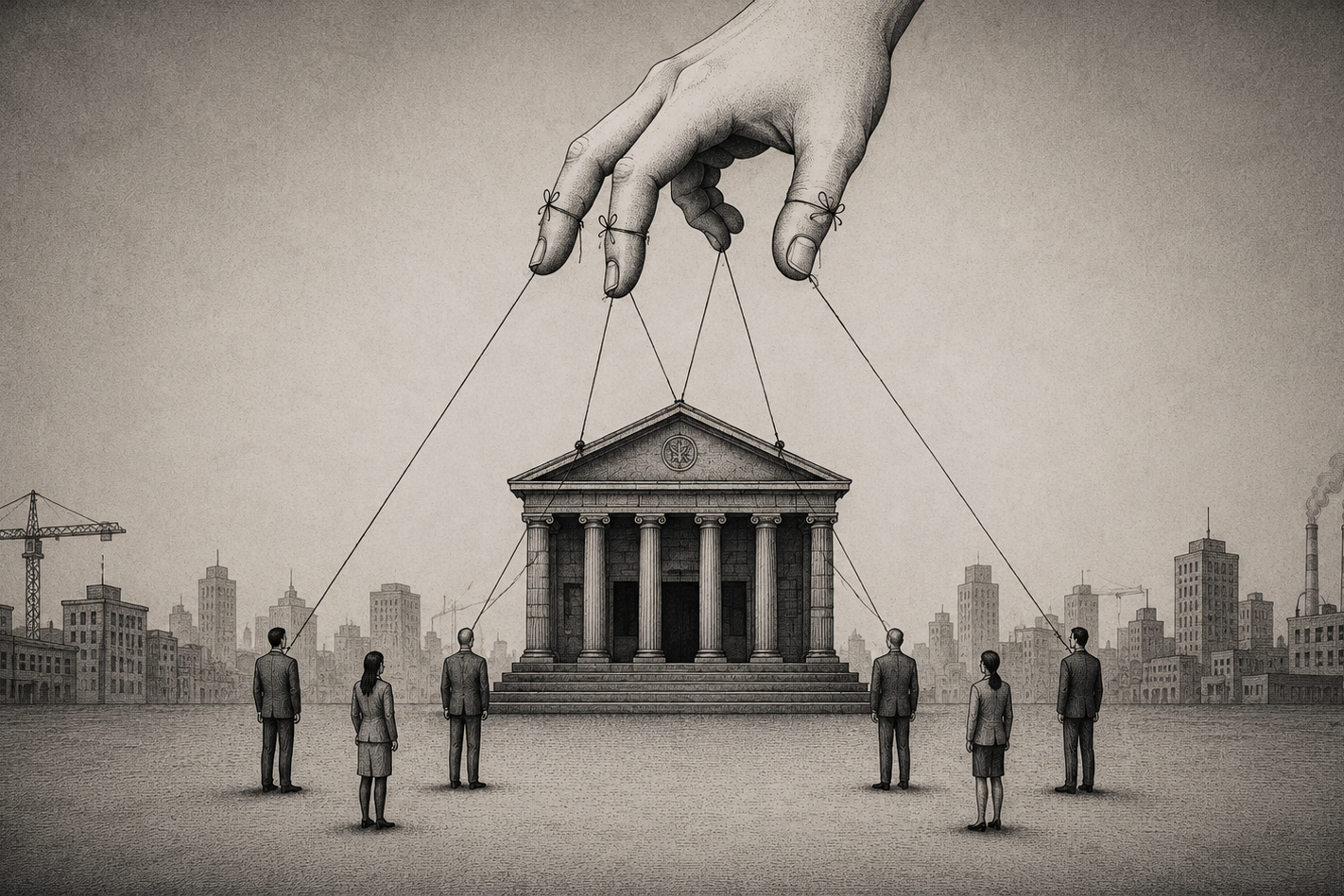
These were not separate subjects placed next to one another on a conference agenda. They pointed to the same underlying condition: the old guarantees of order are weakening, while the new architecture has not yet taken a settled form.
The significance of such a conference is therefore not simply in what was said. It is in what became visible through repetition, emphasis and connection. Certain questions appeared across different rooms and different policy areas, suggesting that the pressure points of the current order are no longer contained within traditional categories.
The question is no longer only: what will the new world order look like? A more precise question may be: who now has the capacity to sustain order when the old centres of power can no longer do so alone?
Security Is No Longer Only About Defence
The discussion around NATO after Ankara made one shift particularly clear. Defence can no longer be understood only as military capability. It is increasingly a question of resilience.
Resilience, in this context, is not a soft or secondary concept. It is the capacity of societies, institutions, supply chains, defence industries and alliances to withstand prolonged pressure without losing strategic coherence.
The traditional security architecture was built on assumptions that now appear less stable: reliable American protection, predictable escalation patterns, sufficient industrial capacity, and the belief that defence planning could remain largely separate from economic policy. These assumptions are now being tested at the same time.
For NATO, the question is not only whether it can defend territory. It is whether it can defend the political and institutional conditions that make collective defence credible. Alliances need more than declarations. They need production capacity, political endurance, technological adaptation and public trust.
Security is becoming a systems question.
Critical Minerals Reveal the Material Base of Power
One of the clearest signals came from the discussion of critical minerals.
For several decades, globalisation allowed many societies to treat material dependencies as technical or commercial matters. Supply chains were discussed in the language of efficiency. Minerals, processing capacity, logistics and manufacturing often sat behind more visible conversations about finance, innovation and diplomacy.
That separation is no longer possible.
Critical minerals now sit at the centre of several strategic agendas at once: AI, defence production, batteries, energy transition, green technology, infrastructure and industrial policy. The question is not simply who has the resources. It is who controls extraction, processing, standards, investment conditions and long-term supply confidence.
This is a different kind of power. It is less visible than military force, but no less consequential. It suggests that the new order will not be shaped only by speeches, treaties or summits. It will also be shaped by mines, ports, factories, grids, chips, rare earths and the ability of governments to coordinate with industry over time.
The future global order has a material base.
AI Is Becoming a Category of State Power
AI has moved beyond the language of technology adoption. It is increasingly discussed as a strategic capability.
This is not only about productivity or automation. AI changes how states predict, govern, defend, persuade and compete. It affects intelligence, military systems, cyber operations, public administration, economic modelling, information environments and institutional decision-making.
The central question is therefore not simply who builds the most advanced models. It is who controls the infrastructure around AI: compute, data, standards, regulation, talent, security protocols and the ability to integrate AI into institutions.
This creates a new form of asymmetry. States and companies that control AI infrastructure may shape the conditions under which others operate. At the same time, excessive dependence on external systems may create strategic vulnerability.
Europe’s dilemma is particularly important. It seeks to regulate AI responsibly, but it also needs to compete. If responsibility becomes detached from capability, it risks becoming a language of aspiration. If capability becomes detached from responsibility, it risks deepening instability.
AI is no longer a separate technology debate. It is part of the architecture of power.
Middle Powers Are No Longer Peripheral
Another signal running through the conference was the changing role of middle powers.
The old vocabulary of international relations often divides the world into great powers and smaller states. Great powers shape the rules; smaller states adapt. Yet the current order is becoming harder to explain through that hierarchy alone.
Middle powers cannot usually impose a global order. But they can alter its direction. They can build coalitions, expose institutional weaknesses, influence standards, shape regional alignments and force larger actors to respond to realities they might otherwise avoid.
Ukraine is one of the clearest examples of this shift, but it is not the only one. The broader pattern matters. In a fragmented order, influence does not come only from size. It can come from strategic location, technological adaptation, diplomatic agility, moral legitimacy, resource control or the ability to become indispensable to a coalition.
This does not mean hierarchy has disappeared. It means hierarchy is becoming more contested, more networked and less predictable.
Middle powers matter because they often stand where the consequences of global disorder become most concrete.
Europe and the UK Are Searching for Strategic Form
The conference also made visible a more local, but no less significant, question: what kind of strategic actors can Europe and the United Kingdom become in this environment?
Europe faces a difficult transition. It has long been powerful as a market, a regulatory space and a normative project. The present moment asks whether it can also become a strategic actor: capable of producing, defending, financing, coordinating and acting with speed.
This is not only a question of defence spending. It is a question of identity. Can Europe protect the rules it helped build? Can it reduce dependence without retreating from openness? Can it treat enlargement, industrial policy, energy security and defence production as connected parts of one strategic problem?
The United Kingdom faces a related but distinct question. Its search for a role in a changing order depends on alliances, values, legal credibility and practical partnerships. Values cannot remain only a language of reputation. They need to become part of strategic capacity: something that shapes decisions, builds trust and strengthens external relationships.
Both Europe and the United Kingdom are dealing with the same underlying issue. The old roles are no longer sufficient, but the new ones are not yet fully formed.
What Became Visible
Taken together, these signals suggest that the next phase of global order will not be built in one place or by one actor. It will be assembled across overlapping systems: defence, law, technology, minerals, energy, finance, alliances, regional coalitions and institutional adaptation.
This makes the world more difficult to read, but not impossible to understand. The task is to look for patterns across domains that are too often analysed separately.
NATO after Ankara is not only about NATO. It is about whether alliances can remain credible when industrial capacity, political endurance and public resilience are all under pressure.
Critical minerals are not only about resources. They are about the material conditions of technological and military power.
AI is not only about innovation. It is about state capacity and strategic dependency.
International law is not only about rules. It is about whether rules can still create consequences.
Middle powers are not only secondary actors. They are increasingly places where the tensions of the whole system become visible.
The main signal from Chatham House London Conference 2026 may be that the next order will not arrive as a single settlement. It is already forming in fragments: through defence coalitions, technological standards, supply chains, legal consequences, energy dependencies, regional alignments and states that are forced to act faster than institutions can adapt.
This does not mean that the world is without structure. It means that structure is becoming more networked, more material, and more dependent on resilience than on formal consensus.
The question, therefore, is not only who will lead the next phase of global order. It is also which signals already show how that order is being assembled.
Signals from Chatham House is not a record of what was said. It is an attempt to read what became visible.
The next essay in this series will examine Ukraine and the role of middle powers in the emerging architecture of global order.
- AI Governance
- Chatham House London Conference 2026
- Critical Minerals
- Europe
- Global Order
- International Law
- Middle Powers
- NATO
- Signals from Chatham House
Related




Written by
Founder & Editor-in-Chief, Cambridge Radar · Business Strategist & AI Systems Architect
Founder & Editor-in-Chief, Cambridge Radar, Business Strategist & AI Systems Architect