
The collapse of a political system begins long before its formal downfall. External shocks merely accelerate a decay that has already hollowed out the foundation from within.
The fall of European monarchies after the First World War was not merely a consequence of military losses; it marked the final stage of a profound internal rupture between privilege and duty.
When status is no longer tied to actual responsibility, and power exists as an inherited form devoid of practical function, a system loses its legitimacy.
For centuries, the aristocratic model rested on the ideal of service. Its degradation began when honor was reduced to formal ritual and responsibility became a symbolic facade. The form remained, but the essence had vanished. Revolutions merely formalized a process that had already reached its conclusion.
Hereditary elites were eventually replaced by “people of the masses” – a sweeping experiment in broadening access to power. This transition brought new energy, yet it simultaneously exposed a fundamental flaw: the capacity for influence does not equal competence. Managing complex systems requires more than just good intentions; it demands institutional maturity.
In the 20th century, politics increasingly became a stage for charismatic figures rather than professionally engineered decision-making mechanisms. Declarations of equality and justice outpaced the creation of the rules necessary to secure them. The gap between noble intentions and a lack of structural logic led to systemic corrosion.
This era showcased the Dunning-Kruger effect in action: limited competence is often blind to its own boundaries. In governance, this manifests as an accumulation of decisions made without calculating their consequences. The problem is not found in isolated errors, but in the total absence of self-correcting mechanisms.
The evolution of new elites mirrored the old trajectory: from a desire to be heard to a craving for untouchability. Power ceased to be a function and became a resource for self-affirmation. The image of a “royal seal” being used to crack walnuts perfectly captures this shift—accessing the trappings of power without an awareness of its substance.
In such an environment, another pattern emerges. Where elites lose internal constraints but retain their appetite for privilege, shadow intermediaries appear. When formal rules are not backed by real behavioral standards, governance shifts to informal networks of influence. Kompromat, loyalty, mutual obligations, and the logic of “collective silence” begin to function as a hidden constitution.
Under these conditions, criminal or semi-criminal structures become a functional response to an institutional vacuum. They act with speed and discipline, exploiting the weaknesses of others. However, their efficiency is fundamentally limited: it creates no long-term value. Criminal logic can control resources, but it is incapable of fostering sustainable development. It exhausts rather than constructs.
Today, societal complexity has reached a point where improvisation has become a liability. Globalization, the velocity of information, and technological interdependence have turned political decisions into high-stakes operations. In this sense, modern governance increasingly resembles aviation.
Civil aviation learned long ago that even the most talented pilot cannot be the sole guarantee of safety. High-reliability systems are built on transparent procedures, distributed responsibility, and the constant monitoring of risk parameters. Since the human factor remains the primary cause of most incidents, the goal is not the heroization of the leader, but the minimization of the space for fatal error.
Political systems rarely apply such logic. Strategic decisions often depend on a narrow circle of individuals and are made without a prior analysis of alternatives or non-obvious risks. The consequences of such mistakes are distributed across society, while responsibility remains diffused.
Reimagining accountability requires a change in the architecture of management. This is not about replacing people with machines, but about creating an environment where every significant decision is vetted for logical consistency, ethical compatibility, and projected impact. In this context, algorithms are not subjects of power, but tools for verification.
Artificial Intelligence can serve as a digital assistant: exploring alternatives, modeling consequences, and identifying contradictions. This does not negate political responsibility; it transforms it from a declarative category into a measurable one. When the logic of a decision becomes transparent, the room for back-channel deal-making shrinks. Power stops being a privilege of information access and becomes a function of risk management.
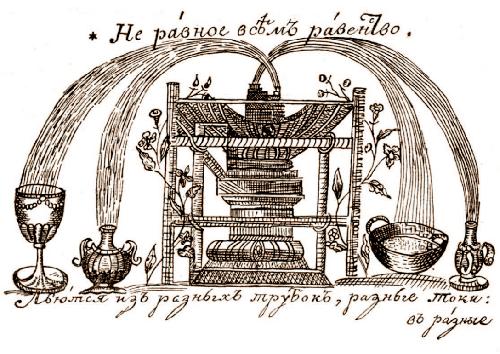
In this context, Hryhoriy Skovoroda’s principle of “unequal equality” takes on special significance. His metaphor of a fountain filling vessels of different capacities emphasizes a simple truth: justice does not mean sameness. It means a correspondence between an individual’s capabilities and the scale of the task they undertake.
A system based on this principle aligns competence with authority. The right to make decisions is granted neither by birth nor by popularity, but through a verified capacity to maintain structural stability and answer for the consequences of one’s actions.
Transparent decision architecture becomes the guarantee of this alignment. It is not a moral tribunal – it correlates the scale of influence with a proven level of competence. This is not a punishment for imperfection, but a condition for safety.
At the same time, an algorithmic system cannot be dehumanized. To ignore human identity is to turn any tool into a mechanism of coercion. The balance between technological verification and the ethical dimension remains the ultimate hallmark of quality.
In such a model, leaders become variables, while the structural logic of development remains the constant. Individuals may change, but the architecture of responsibility persists.
The shift from “power as privilege” to “power as a professional function” marks a change in the cultural code. Power is no longer a status symbol; it is a high-risk profession. Gaining access to it implies a readiness to operate under constant monitoring.
The history of the 20th century proved that neither hereditary dynasties nor charismatic messiahs can guarantee stability. In the 21st century, the key resource is the architecture of responsibility. Only a system that marries human dignity with technological precision is capable of limiting the space for degradation and the parasitism of shadow forces.
The journey from the royal seal to the architecture of algorithms is not a path from tradition to the machine. It is a journey from symbol to function. If a political system can learn to align authority with proven capacity, and decisions with a transparent logic of consequences, it gains a chance at long-term resilience.
 Cambridge Radar - Signals of What’s Next
Залишити коментар